
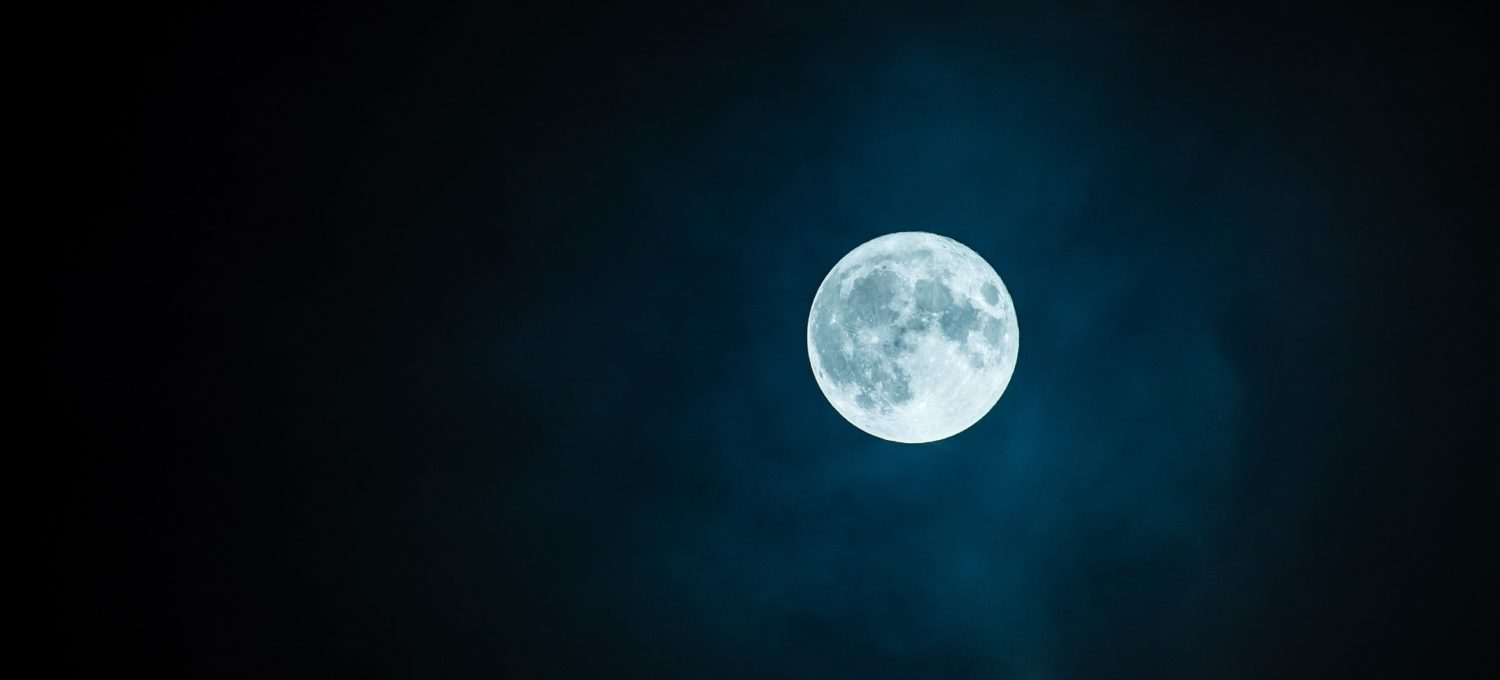
The gorgeous queen of the night! The moon has been one of the most remarkable creation of nature and since the dawn of humanity, has baffled civilisations. It is known to be the brightest object in the night sky, surpassing Venus who appears as a small white star. Nicknamed Luna, it has been the centre for numerous folklores, mythologies and cultural references. No wonder, today, the moon is not merely a unit in the sky, it has become part of the lives of the Earth denizens.
Scientifically speaking, the moon is in a synchronous rotation with Earth, which meanings that the same side is always facing earth. Humans first stepped on the surface in 1969 through the Apollo 11 mission. Its creation has long been contested but the most acknowledged explanation is that it was created from the debris after a colossal impact between earth and a dwarf planet named Theia.
Theia was nearly at the size of Mars during the impact and is theorised that this proto-Earth’s orbit was close to our planet. Eventually, Theia was perturbed from the gravitational influence of Jupiter and Venus which sent it off orbit, resulting in a collision with Earth. The resulting debris formed the moon.
The moon knew numerous temperature shifts since its creation. The moon comprises of highly reflective elements in its surface components which makes it glow bright at night as it reflects light from the sun. During the day, the moon will be very hot and have a potential of reaching about 100 degrees Celsius. At night, the temperature drops to -173 degrees Celsius.
This incredible celestial body has undeniably spawn many folklores and mythologies. Greeks would associate the moon with Athena, the virgin goddess of wisdom and war. In Roman mythology, the moon would personify as Diana, goddess of hunt as the crescent moon looks like a bow. In Indian mythology, the moon will not be interpreted as a woman but as a man who is radiant and beautiful.
Phases of the moon and eclipses would be embraced by numerous folk stories. The most popular story being that of ancient China. The Chinese believed that during an eclipse, the moon enters a shadow realm. They would make loud music and dance so that the moon would stay back out of curiosity and not be tainted by darkness.
Entertainment and arts have also stated the moon as the main source of inspiration. Famous painter Van Gogh’s Starry Night depicts the moon as a cluster of bright colours. Movies based on the moon landing would start to emerge in the late 90s including horror and sci-fi. The gaming industry would not be deterred as well. Many games or online gaming sites would use the moon as a theme. Moon Games, one of the best casino of the UK, has even adopted a name reflecting the phenomenal satellite.
Neurologists and scientists also bring to the fore the theory that the intensity of people’s sleep is sometimes based on the phase of the moon. People would generally have the best sleep during a New Moon and the worst sleep during a Full Moon. Some instances of Reiki and Energy Healing refer to the phases of the moon as a source of positive light.
Today, the moon is no longer a natural satellite. It is part of our lives. Amateur of astronomy or not, a sight of the moon in a clear night sky will surely bring some happiness or memories in a way. Everyone has their own story or memory linked to the moon. What is yours?
Photograph by Rkarkowski