

Lock picking is a mental art, misjudged by most as confined to the criminal world by preconceived notions and lack of understanding. It demands research, analysis, patience, persistence and coordination. If you’re looking for a brain test that would no doubt pique your interest, this non-conventional practice has what you require.
Here are the four things you need to get started:
Practice lock
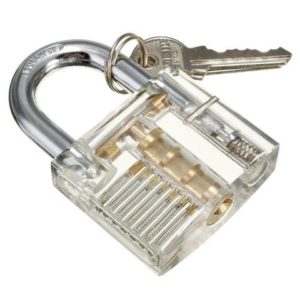 Keep in mind chances are you’ll end up breaking this one so avoid purchasing anything costly or aesthetically appealing. Choose a practice lock that matches your lock picking level – beginners are recommended to use the basic pin tumbler. Better yet, get a clear practice lock to see what you are doing while you are still practicing your techniques.
The lock picking community now creates and sells specially-made practice locks designed for repeat use. Some even have several lock mechanisms so you can use the same practice lock as you advance. If you’re serious about this hobby, opt for ones that you can use from beginner to expert level.
Lock pick set
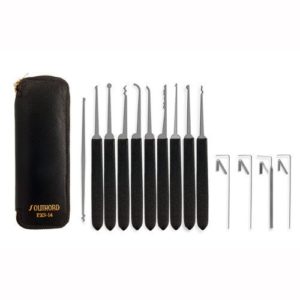 Managing to pick a lock with nothing but a pair of bobby pins is an achievement to be proud of but getting the correct tools would increase your chances of success. As locks increase in their complexity, bobby pins won’t be enough. A complete lock picking set has 32 tools but if you don’t want to invest right away in a wide collection, you can start with the basics.
The simplest set would include a tension wrench and a few rakes. The tension wrench is a simple hooked tool that allows you to push each pin upwards one at a time. Repeat this with each pin until the driver pin remains above the shear line, even when the key pins fall back into place. Practicing with a tension wrench allows you to get the correct amount of tension over time before moving on to the other tools and more complex locks.
There are several variations of rakes but the simplest one is mostly straight with the tip bent into a wave. This design allows you to push several pins in one fluid movement, making lock picking faster and easier.
Unused locks
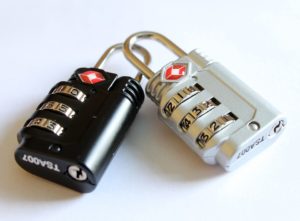 If you have any unused locks lying around the house, you can opt to begin practicing with those instead. Did you have a renovation recently or bought replacement doorknobs just in case? These basic pin tumbler locks are beginner-friendly. You can also invest in a practice lock then, when you’re confident you can pick a lock without breaking it, pick the unused lock instead to test your skills. These would appeal if you’re not comfortable with the idea of trying to pick an actual lock in your house.
Lots of patience
It’s possible to master a new level in minutes but if that’s not the rate you’re going at, don’t worry. Every person’s lock picking journey is different. While some may be able to perfect beginner levels at lightning speed, it may not be the case with more advanced locks. Remember it’s about finesse and avoid doing a sloppy work early on to lessen the difficulty in picking complicated locks.
Photograph by Steve PB